The average time spent on Food Navigator reading these stories was 3 minutes and 42 seconds, which was 10% higher than even the magazine’s own stories. That's pretty amazing for paid advertorials! A significant factor in it, we believe, was the way it was packaged up with video and images.
With over 160 scientists and almost 100 years of knowledge, it's no wonder that Fonterra R&D is publishing white papers almost weekly. This is the content gold that other companies can only dream of owning. In the world of AI, your experts are your authenticity.
There is only one problem: the knowledge is written by scientists for scientists.
How do you translate raw data into compelling news stories for publications such as Food Navigator (the industry trade magazine) and then re-purpose it for wider use within the Fonterra R&D communication channels?
The challenge was first to understand the science (no mean feat!) and then identify the customer benefit, all within a tight 14-day deadline and with new brand guidelines.
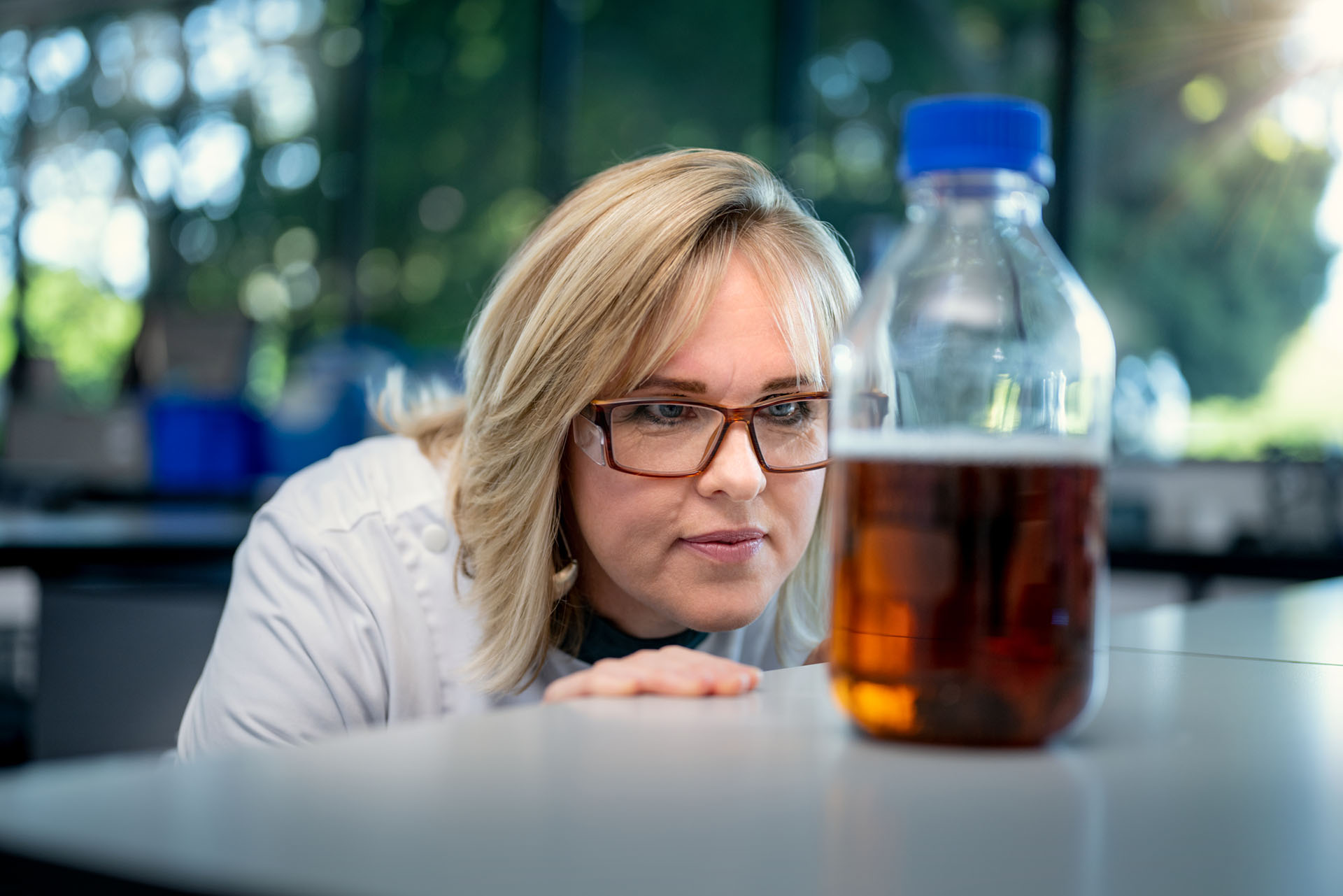
A huge advantage is that R&D has its own science communicator, Senior Marketer Laurette Batstone, who was able to drive the project, liaise with scientists, collaborate on scripts and then film in the labs - something that requires access permissions.
Another advantage is that Fonterra has diligently collated and tagged over 7,000 images and videos in Brand Central. The b-roll is there; you just need to know how to find it.
As part of the publication, Food Navigator had already written the stories. They were good, but lacked a compelling hook to them. So BOW were briefed to help with three 'news story' videos to be inserted into the stories, targeting the Asian, American, and European markets, respectively.
After interrogating the scientists, Laurette and BOW worked on three scripts with the scientists providing technical advice throughout.
What's important to note here is that these weren't typical videos. They were writer-led, story-first videos with a strong explanatory component. When you watch them, listen carefully and you will get what we mean. In each case, we identified the 'hook' or problem we could solve, then the solution, followed by examples where we could.
The first story was about UHT cream for the Asian market, starting with a delicious fact: UHT cream has evolved from almost no usage to being incorporated into over 260 million cakes. (If lined up end-to-end, that's enough to span the entire length of the Great Wall of China! )
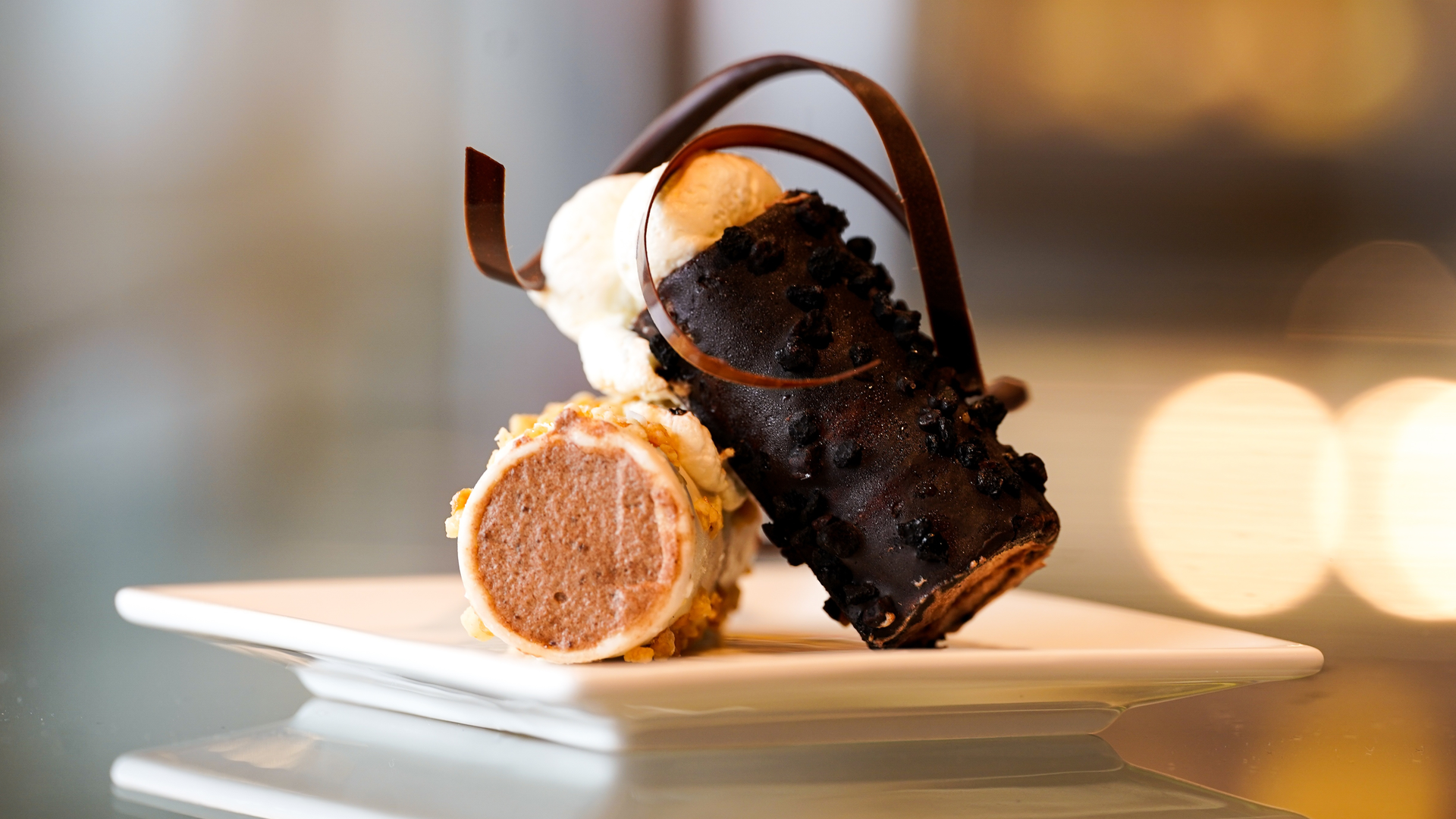
The audience consisted of bakers and chefs, so we sourced the most delicious shots, which also showcased the superior hold of UHT cream. The structure of the videos was a three-beat approach: start with a teaser fact, establish the customer's pain point, and then introduce the solution.
Again, this was a right-brain, left-brain exercise because we had to understand how the AI was helping take products to market faster, then boil this down into a simple script. It was an agile job, working between BOW's animator, video editor, writer and Fonterra's internal content team.
By sourcing footage and creating animation, we were able to work at pace and produce a cost-effective yet compelling news content video. We even sourced a credible reporter for the voiceover.
Finally we created a video for the European markets, tailoring the footage to work in with the look and feel of this market. We then worked with Laurette to provide images and titles for Food Navigator. These videos will then also be used in the R&D customer sales presentations here.
We also worked with Food Navigator closely to ensure the images and story supported the video. This resulted in a promotional feature being elevated to a higher profile in the publications under news and focus and also in the newsletter.
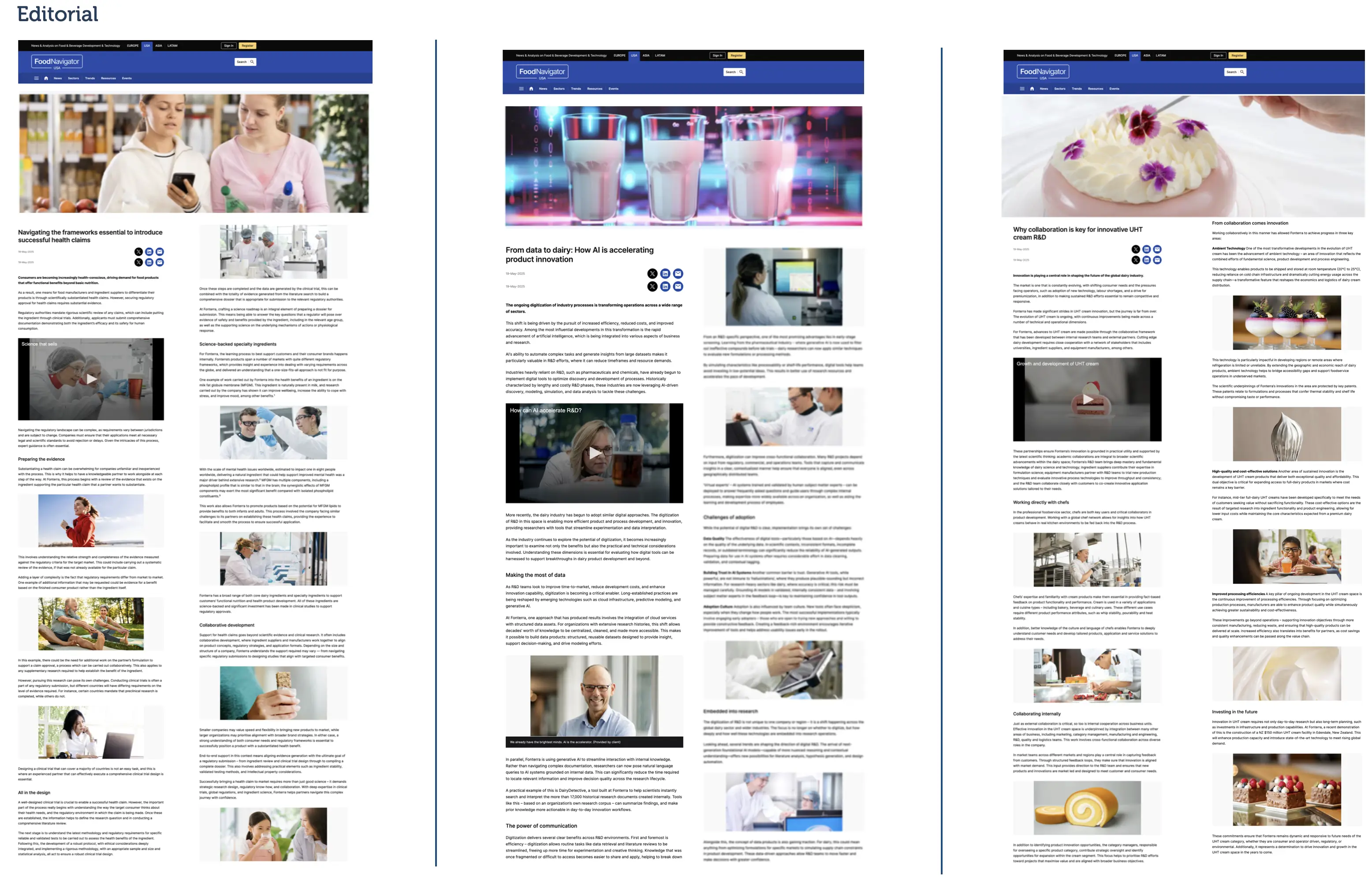
The average time spent on the pages was 3 minutes and 42 seconds, which was 10% higher than even the magazine’s own stories, even though these had to be clearly labelled as advertorials. The AI story attracted 355 unique visitors, which is 57% above the website average, with page views an impressive 70% higher than average. Notably, 70.4% of these viewers were senior or middle management. Meanwhile, the accompanying video achieved a 63% completion rate, with an average watch time of 87 seconds, matching the video’s full length.
The UHT cream story also performed strongly, with time on site 30% above the website average, page views 59% higher, and unique views 70% greater than average. Its video had a 47% completion rate and an average watch time of 81 seconds per viewer.
This was equally impressive when you consider that we turned the first video around in 7 days for a staff presentation, with the rest in 14 days.
“It is rare to be marketing the capabilities of an entire research hub, so there are no marketing principles. You have to trust your instinct and find the right partners to support you – which is also a hard ask in this space. Big On Writing came with an open mind and a thirst to know everything, and anything about the science. They didn’t just want to turn the job around; they were invested. They were always happy to push the envelope, and we learned to trust them as the ideas they presented were relevant and on point.”
Laurette Batstone, Senior Marketing & Communications Manager, Fonterra